Musical Monikers
Q.
What were some of the nicknames given to and/or assumed by famous composers of the past?
.
A.
.
Ludwig van Beethoven. 1770-1827. The Grand Mogul or Big Shot
As you can well imagine, the relationship between teacher Haydn and student Beethoven was not all dolce and light. “I learned nothing from Haydn,” said Beethoven. Meanwhile, Haydn called the bombastic genius Ludwig, ‘The Grand/Great Mogul’ or ‘Big Shot.’
Vincenzo Bellini. 1801-1835. The Swan of Catania
This Italian opera composer was dubbed ‘The Swan of Catania’ to acknowledge his birthplace and the grace, beauty, flow and length of his melodies.
Johannes Brahms. 1833-1897. Young Eagle
Brahms’ ‘Young Eagle’ nickname is said to have originated with Robert Schumann who hosted the young talent in his house for months, and greatly respected Brahms’ musical output.
Edward Kennedy Ellington. 1899-1974. Duke
Here’s a composer who is primarily known by his nickname, ‘Duke.’ Ellington was given the name in response to his elegant manners and easy social grace.
Joseph Haydn. 1732-1809. Papa
Hayden’s ‘Papa’ nickname went through a litany of associations. First, it was an admiring nod at his willingness to mentor young composers. Next, the name grew to encompass his influence on music as a genre. Later, the fickle bunch called him ‘Papa’ to imply that his pieces were out of date and unoriginal.
Wolfgang Amadeus Mozart. 1756-91. Trazom Gnagflow.
With a name like Joannes Chrysostomus Wolfgangus Theophilus Mozart and a rather large personality, we can’t be surprised that Mozart assumed a number of nicknames, created by others and himself. At times, for instance, he would sign letters with his name spelled backwards, i.e. Trazom Gnagflow.
.
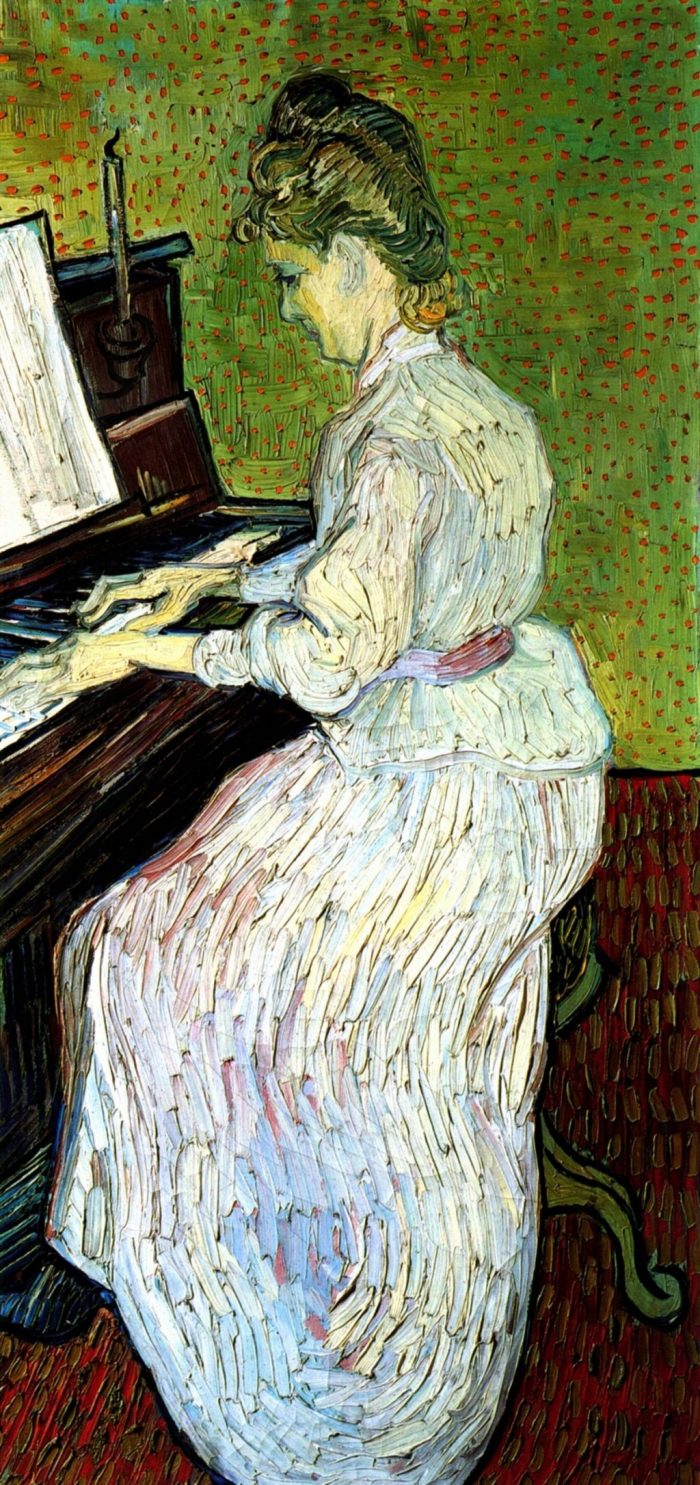
Vincent van Gogh. Marguerite Gachet at the Piano. 1890
.
Gioachino Rossini. 1792 (February 29th) to 1868. The Swan of Pesaro
Here we have another Italian ‘swan’ composer whose nickname reflected his birthplace, and the renown his popular works (e.g. The Barber of Seville) brought the town. However, Rossini – with his dry wit and history of psychological challenges – did not like the treacly sobriquet.
Franz Schubert. 1797-1828. Little Mushroom
Ouch. Schubert’s ‘Little Mushroom’ nickname was aimed at his height (reputedly 5 foot one) and his portly physique. This was allegedly a friendly nickname, but…
Clara Schumann. 1819-96. The Grande Dame of Music
Clara Schumann is currently known first as the wife of composer, Robert Schumann. She was, however, a remarkable musician – a talented composer, and a child prodigy pianist who continued to astound into adulthood. A ‘Grande Dame’ indeed. Clara Schumann was also crowned ‘Queen of the Piano’ from a young age.
Richard Strauss. 1864-1949.The Waltz King
Why was Strauss called ‘The Waltz King?’ Well, his 500 plus dance compositions include more than 150 waltzes, such as the ever-played ‘Blue Danube’ and ‘Tales from the Vienna Woods.’
Antonio Vivaldi. 1678-1741.The Red Priest
Vivaldi was ordained as a priest in 1703, though he did not continue as such. Add to that his bright red hair, and ‘The Red Priest’ nickname becomes clear.
.
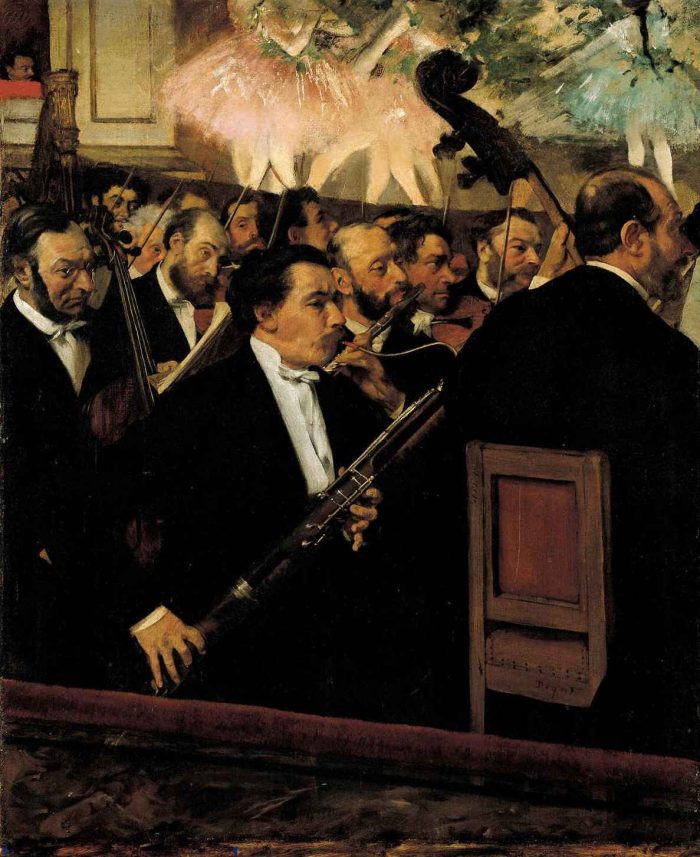
Header Art: Edgar Degas. The Orchestra at the Opera. 1870